
Custom Hearing Aid Fitting & Programming Explained
The single biggest predictor of whether you'll actually wear your hearing aids is the quality of the fitting — not the price or the brand. Here's what a real fitting process involves and what we do differently.
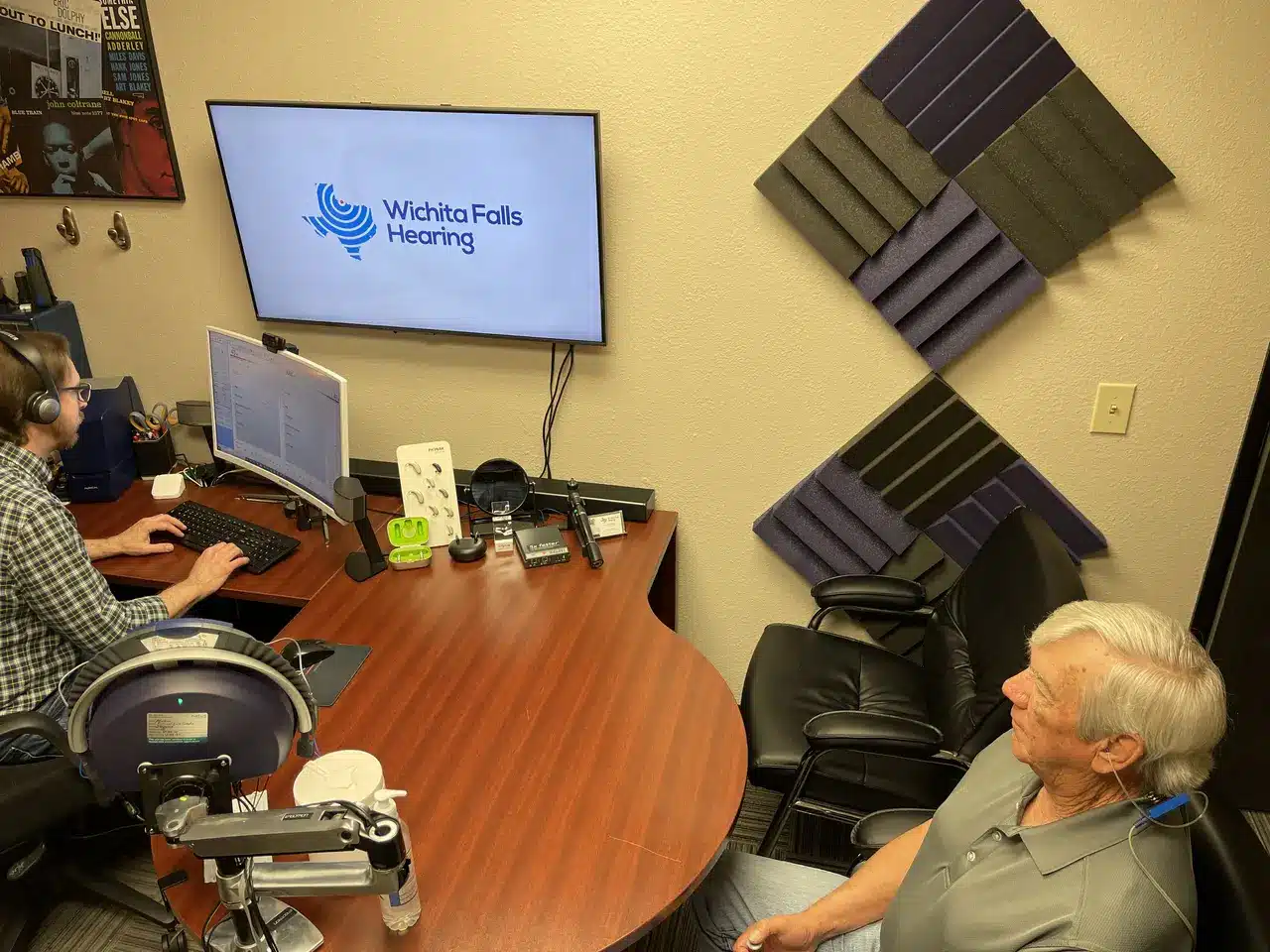
The single biggest predictor of whether you'll actually wear your hearing aids — and benefit from them — is not the price, the brand, or the technology level. It's the quality of the fitting. A cheap pair of hearing aids fit well outperforms an expensive pair fit poorly. This is the part of the process most patients underestimate, and it's the part that determines whether you become one of the people whose hearing aids end up in a drawer or one of the people who can't imagine life without them.
Here's what a custom fitting actually involves, why it matters more than people think, and what we do differently at Wichita Falls Hearing.
What "Custom Fitting" Really Means
"Custom" in this context covers two different things, both essential:
- Physical fit. The hearing aid (or its receiver tube and dome) has to sit in your ear in a way that's comfortable for all-day wear, doesn't work loose during chewing or talking, and creates the right acoustic seal for your prescription.
- Programming fit. The hearing aid's amplification settings have to match your specific hearing loss across every frequency, in every listening environment you encounter. This is software, but it's deeply personal — your audiogram is as unique as your fingerprint.
Both pieces have to be right. A hearing aid programmed perfectly but fit physically wrong will feed back, fall out, or hurt. A hearing aid that fits physically perfectly but is programmed wrong won't help you understand speech — and that's the whole point of wearing them.
The Initial Fitting Appointment
A first fitting appointment at our Wichita Falls clinic takes about 60–90 minutes. The pacing matters — we don't rush patients out the door. The steps:
1. Confirming the Prescription
We start by reviewing your audiogram (the hearing test results) together. You'll see where your hearing falls on the standard chart — which frequencies are normal, which need amplification, and by how much. The prescription is based on this profile.
2. Initial Programming
We load your audiogram into the hearing aid's fitting software. The software calculates an initial amplification target for each frequency band based on industry-standard prescription formulas (NAL-NL2, DSL v5, or the manufacturer's proprietary formula depending on the device). This is the starting point — not the final answer.
3. Physical Fit Verification
We try the hearing aids on your ears. We confirm the receivers sit in the right spot, the dome size creates the correct seal, the over-the-ear portion rests comfortably, and the device stays secure when you chew, yawn, or move your jaw. Adjustments to receiver wire length, dome type (open, closed, vented), or earmold style happen here.
4. Real-Ear Measurement Verification
This is the step that separates a real fitting from a "load the prescription and send them out the door" approach. We insert a thin probe microphone into your ear canal, alongside the hearing aid. The probe measures the actual sound level being delivered to your eardrum — not what the device thinks it's delivering, but what's actually happening inside your ear.
Why this matters: ear canals vary in shape, size, and acoustic properties from person to person. The same hearing aid programmed to the same prescription will deliver different actual amplification in different ears. Real-ear measurement lets us see the truth and adjust until what reaches your eardrum matches what the prescription called for.
Most providers skip this step. Industry data suggests only about 30% of hearing aid fittings include real-ear verification. We do it every time, because the difference in patient outcomes is dramatic — studies show roughly 79% of patients prefer the sound of REM-verified fittings versus default settings. We've covered this in more depth on our real-ear measurement page if you want the technical details.
5. Live Sound Testing
Now we test in real listening situations. You hear normal conversational speech, you listen to test tones at various levels, you try music if that matters to you. We adjust the amplification curves, compression settings, and noise reduction parameters based on what you tell us. "Too loud" or "voices are tinny" or "I can hear myself echoing" — we tune it out.
6. Connectivity Setup (if applicable)
If your hearing aids include Bluetooth (most modern rechargeable models do), we pair them to your phone, walk through the manufacturer's app, set up streaming for calls, and configure any remote-control features you'll use. We test that media streaming works and the volume is calibrated for both phone calls and music.
7. Care and Use Walkthrough
Before you leave, we walk through daily care: inserting and removing, cleaning, charging routine (or battery changes for disposables), what to do if they get wet, how to use any program-switching features, and what's normal versus what should prompt a call to us.
The Trial Period
Wondering how this applies to your hearing?
A free 30-minute evaluation at our Wichita Falls clinic gives you clear answers — no pressure, no obligation. Most patients leave with a plan they can act on the same day.
You then wear them in your real life — for a structured trial period, typically 30–60 days. This is critical. The clinic is a quiet, controlled environment. Your actual listening situations (the restaurant, the noisy kitchen, the family gathering, the church service) are where the rubber meets the road.
We give you a follow-up appointment about a week into the trial. Bring notes about what's working and what isn't. Common adjustments at the first follow-up:
- "My own voice sounds weird" — usually addressed by adjusting the occlusion effect compensation or the dome venting.
- "Crinkling papers and silverware are too loud" — turn down the soft-sound amplification or activate impulse-sound suppression.
- "Restaurants are still hard" — fine-tune the directional microphone settings and noise reduction program.
- "It whistles when I hug someone" — adjust the feedback canceller or change the dome to a closer-fitting type.
- "My phone calls are tinny" — recalibrate the Bluetooth streaming EQ.
Most patients need 2–4 fine-tuning visits in the first 90 days to dial everything in. After that, an annual check is typically enough.
Why Generic "One Size Fits All" Approaches Fail
Over-the-counter hearing aids, big-box retailer bundles with minimal fitting time, and mail-order programmable aids all share the same fundamental problem: they skip or shortcut the custom programming and verification work. The hardware in the box might be excellent. But:
- Without a current audiogram, the device is amplifying frequencies you don't need help with and missing frequencies that do.
- Without real-ear measurement, no one knows what's actually reaching your eardrum.
- Without follow-up visits, the inevitable initial issues never get tuned out — you give up and put the aids in a drawer.
The hearing aid industry's dirty secret is that the dropout rate for poorly-fit devices is enormous — significant percentages of OTC and big-box hearing aid purchasers stop wearing them within a year. The hardware isn't the problem. The fitting process is.
What's Included in Our Fitting Process
Every hearing aid purchase at Wichita Falls Hearing includes the full fitting process — not a separate add-on, not an extra fee. That covers:
- Initial comprehensive evaluation with audiogram
- Programming based on your prescription
- Real-ear measurement verification
- Physical fit optimization (receiver length, dome type, earmold customization)
- 30–60 day trial period in your real environments
- Multiple follow-up adjustment visits
- Manufacturer app setup and Bluetooth pairing
- Ongoing service, cleaning, and reprogramming for the life of the device
Schedule a Free Evaluation
If you're shopping for hearing aids, ask any provider three questions before buying:
- Do you perform real-ear measurement on every fitting?
- How many follow-up appointments are included in the price?
- What's your return policy if it doesn't work out?
If the answers feel evasive, that's the answer. The fitting is what makes hearing aids work. Schedule a free hearing evaluation with our team and we'll walk you through the entire process before you make any purchasing decisions.
Living with hearing aids
Fitting, verification, maintenance and the mistakes that cost people their first pair.
Hearing aid repair in Wichita FallsThe Most Common Mistakes New Hearing Aid Owners Make
The first few weeks with new hearing aids are an adjustment — and many patients quietly make the same handful of mistakes that hurt their results. Here's what to watch for and what we wish every new wearer knew on day one.
Real-Ear Measurement: How It Makes Hearing Aids Actually Work
Most hearing aid wearers who hate their devices are wearing aids that were never verified inside their actual ears. Real-ear measurement is the difference between guessing and knowing — and only about 30% of providers do it.
Why Regular Hearing Aid Service Matters (and What to Expect)
Hearing aids are precision instruments worn 12+ hours a day in earwax, sweat, and skin oils. Without regular service, performance degrades quietly. Here's what professional service includes and how often you actually need it.
Ready to take the next step?
Your first hearing evaluation at Wichita Falls Hearing is free and takes about 30 minutes. We'll give you straight answers about your hearing and walk through your options together — no obligation to buy anything.
Or read more from our hearing care blog